Following the roll-out of the expanded 24-team FIFA U-20 Women’s World Cup™ at the previous edition, held in Colombia two years ago, four nations are set to once again fly the flag for the African continent at the forthcoming instalment on Polish soil.
Nigeria – who have graced all 11 tournaments, including the 2002 and 2004 iterations, when the competition was still known as the FIFA U-19 Women’s World Championship – are poised to line up alongside seasoned campaigners Ghana and tournament rookies Benin and Tanzania.
As the countdown to this year’s extravaganza continues apace, we invite you to join us as we dust off the archives and relive the most eye-catching exploits of the CAF representatives on this most prestigious of stages.
Nifty Nigerians blaze a trail
Any conversation about FIFA’s U-20 women’s competition inevitably involves mention of Nigeria’s remarkable ever-present status at the event. The Falconets were the African continent’s sole representatives at the maiden edition in 2002 and again in 2004 as they laid the foundations for their continental counterparts.
After having come away from the inaugural instalment in Canada with plenty of lessons learnt and a point to show for their efforts, the West Africans chalked up a first victory two years later on Thai turf against the formidable Brazil.
Despite goals from up-and-coming superstars Marta and Cristiane for the silky Seleção, Nigeria secured a historic 3-2 win, with Akudo Sabi’s 90th-minute strike securing the spoils for Felix Ibe Ukwu’s charges.
Buoyed by that result, the cream of the African crop clinched a point in their next outing, against Italy, with another Sabi late show punching her team’s ticket to the last eight, where they squared off against eventual champions Germany.
In what proved to be a hard-fought affair, Anja Mittag’s 86th-minute leveller forced extra time before Germany prevailed on penalties.
New arrivals impress
Following in the Falconets’ flighty footsteps, Congo DR became the second African side to strut their stuff in the illustrious U-20 Women’s World Cup arena. Indeed, Les Leopards could be spotted at back-to-back editions (in 2006 and 2008), in which they failed to hunt down a single point. That said, they came mighty close to opening their account in their maiden campaign, going down by a single strike in their first two group-stage outings, with Kelley O’Hara’s spot kick condemning them to a 2-1 defeat to eventual semi-finalists the USA and Amandine Henry landing the coup de grâce in a 1-0 success for the French.
The 2010 tournament in Germany brought a debut appearance for a third African representative in the shape of Ghana, who became the first team from the continent to taste victory as newbies. Pitted in a group featuring Korea Republic, Switzerland and the USA, they failed to progress despite amassing four points. After getting up and running with an impressive 1-1 draw against the Stars and Stripes, the Ghanaians swatted the Swiss aside 2-0 in their group-stage curtain-closer thanks to efforts from their two Elizabeths: Addo and Cudjoe.
Falconets hit new heights
Nigeria and Ghana claimed the two CAF qualifying berths in each of the six editions held between 2010 and 2022. Yet, for all of their tournament pedigree, the Ghanaians have never made it beyond the group stage. Meanwhile, the Nigerians have established themselves as the continent’s biggest hitters at the global extravaganza.
At the fifth edition of the prestigious event, Desire Oparanozie fired the Falconets to the final, where 2004 champions Germany lay in wait. The hosts ran out 2-0 winners, with an on-song Alexandra Popp opening the scoring to take her overall goals tally at the tournament into double figures.
That runners-up berth proved to be a foretaste of things to come for the West Africans. Next time out, at the 2012 instalment on Japanese soil, Ndem Egan’s troops made it through to the semi-finals. After topping their group, the unbeaten Nigerians edged Mexico 1-0 after extra time in the last eight. The CAF powerhouses were then undone by champions-elect the USA in a 2-0 loss and would suffer further disappointment as they missed out on a podium finish, falling to a 2-1 defeat against the hosts in the showdown for third place.
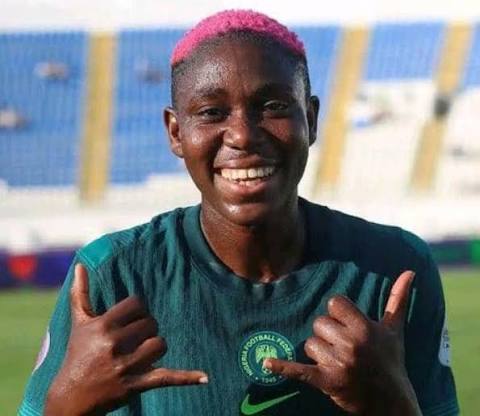
When the competition returned to Canada in 2014, Nigeria, inspired by scoring sensation Asisat Oshoala – more on her in the next section – went one better by contesting the trophy decider.
Across the three tournaments, the Nigerians twice reached the showpiece match (in 2010 and 2014) and bowed out in the semis on the other occasion (in 2012), cementing their status as the continent’s undisputed high-flyers.
Oshoala shines in breakout campaign
As mentioned above, Nigeria put together a run to the showpiece match at the edition held 12 years ago, when Germany were once again their conquerors in a 1-0 extra-time reverse. Despite that most agonising of defeats, the Nigerians could take plenty of solace in the performances delivered by serial goal-getter Oshoala.
Although it took the then Rivers Angels youngster until her third outing to find her scoring boots, with her penalty sealing the deal in a 2-1 triumph over England, there was simply no stopping her once the knockout stage rolled around.
Indeed, she bagged a breathtaking brace – a glancing header and a composed finish – in the 4-1 quarter-final thrashing of New Zealand before racking up a four-goal haul as Korea DPR were put to the sword in a 6-2 romp in the last four.
While she may have failed to breach the German backline in the decisive match, the seven-goal hotshot still claimed the adidas Golden Boot. The twinkle-toed 19-year-old headed home with another prize under her arm as she landed the adidas Golden Ball, in recognition of her status as the tournament’s standout performer. To this day, she remains the only African player to have captured that accolade.
On the back of those dazzling displays, the jet-heeled markswoman began her meteoric rise in the club game, which culminated with a trophy-laden spell at Barcelona. The fearsome forward is now with Saudi side Al Hilal, whom she joined from National Women’s Soccer League outfit Bay FC.
Eto gets Indomitable Lionesses roaring
At the inaugural instalment of the competition with 24 teams, which took place in Colombia two years ago, tournament regulars Nigeria and Ghana were joined by newcomers Cameroon and Morocco.
While the North Africans’ bow on the ultimate stage yielded a trio of 2-0 defeats, the Indomitable Lionesses enjoyed a rip-roaring debut campaign. Indeed, the Cameroonians’ four-point tally in Group A was enough for them to rank amongst the four best third-placed teams and tiptoe into the last 16, where they took the mighty Brazil to extra time before succumbing 3-1.
Monique Ngock and Co enjoyed a particularly impressive group-stage campaign, in which Naomi Eto announced herself on the global stage with her spellbinding showings. At the double in the 2-2 curtain-raising stalemate against Mexico, the speedster flashed home a net-bursting effort in the groundbreaking 2-0 victory over Australia. In her next outing, she opened the scoring with a fox-in-the-box finish against the Brazilians.
With four goals to her name, Eto – who appears to share her compatriot and near namesake Samuel’s penchant for making the net ripple – more than played her part in ensuring that Cameroon’s first foray into the U-20 showpiece commanded its place in this line-up of standout showings.
The goal-hungry gem has since gone on to cut her teeth for the senior side and made her mark by doubling her country’s lead in Sunday’s 3-0 victory over Malawi in the CAF Women’s Africa Cup of Nations decider as the Cameroonians tasted continental glory for the first time.