One night, while visiting my uncle in his town, I learned more about Nigerian politics than any textbook could ever teach. He invited me out, and what I thought would be a quiet evening turned into a full-blown carnival. In the small bar we entered, people flocked to him as if he were a governor returning from exile. The music blared, bottles were opened, food was ordered in heaps, and my uncle, the man of the moment, picked up every single tab.
By the time the night was over, the bill had crossed half a million naira. I stared in disbelief. He only smiled, leaned close and whispered, “This is how you stay relevant. People must never forget who feeds them.”
That night was not just about pepper soup, malt drinks, and designer trainers. It was politics at its rawest. It was what Nigerians call stomach infrastructure, the unwritten law that survival in public life is less about ideas and more about how many plates you fill.
What is Stomach Infrastructure?
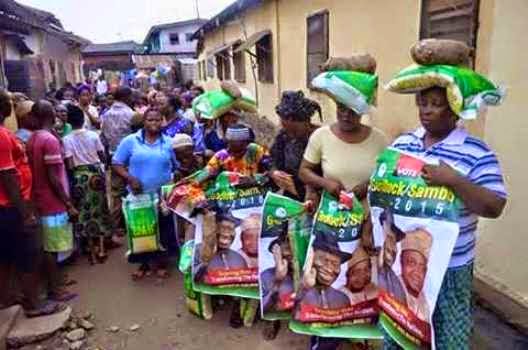
Stomach infrastructure is not written into any constitution, yet it is the most powerful electoral tool in Nigeria. It is the contract between politicians and the people: provide food today in exchange for loyalty tomorrow. A bag of rice, a crate of beer, some cash handed out at a rally, or even covering an extravagant bar bill, all serve the same purpose. It is the currency of influence, and in Nigerian politics, it is legal tender.
This is why campaigns are rarely about policies. They are feasts. They are shows of generosity where candidates try to outdo one another in public benevolence. The people cheer, not because they believe in manifestos, but because they know their stomachs will be catered for.
VVIPs and Political Theatre
At the heart of this culture is the VVIP, very important personnel. These are the godfathers, patrons, and benefactors who bankroll politics. Their role is not subtle. They sit in the front rows at rallies, they arrive in convoys, and they are the lifeblood of campaign financing. To be close to a VVIP is to be close to power.
A politician who fails to honour this theatre of generosity risks political irrelevance. No matter how brilliant or visionary, a leader who ignores the politics of the stomach will be labelled stingy, disconnected, or worse, unfit for office. In Nigeria, generosity is proof of leadership, whether it comes from personal wealth or borrowed funds.
Fayose and the Institutional Approach
No one understood this better than former Ekiti State governor, Peter Fayose. He did not just distribute food during campaigns; he elevated stomach infrastructure to a political philosophy. To him, it was not an insult but a duty. Fayose institutionalized it by creating a ministry dedicated to welfare in Ekiti State. Bags of rice, cash gifts, and food items were distributed directly from government offices.
The people praised him for it. Many saw it as an act of benevolence, a governor who cared for their immediate needs. For some, it was visionary social welfare, but for others, it was simply a smarter way of buying loyalty. Either way, Fayose showed that stomach infrastructure could be more than spontaneous handouts. It could be structured, celebrated, and rewarded at the ballot box.
Godfathers, Campaigns, and Loyalty
Behind every politician who spreads largesse is a godfather who funded the feast. Nigerian politics is a debt economy. When a candidate declares for office, a network of financiers steps in, not out of charity but investment. Money is poured into rallies, publicity, logistics, and of course, stomach infrastructure.
When the candidate wins, the repayment begins. Contracts are awarded, appointments are made, and state coffers are opened to settle those who made victory possible. This is why political office is often described as the fastest route to wealth in Nigeria. It is not merely about governing; it is about paying back the invisible shareholders who bankrolled the campaign.
A Nigerian politician without a godfather is like a goat without a rope in the market. Free for now but destined for capture.
Citizens in the Cycle
But it is not only the politicians and godfathers who sustain the cycle. The people themselves have become accustomed to it. Election days in Nigeria look like market days. Bags of rice change hands, bottles of gin are distributed like holy communion, and crisp naira notes are shared openly. For many voters, this is their only chance to taste the dividends of democracy.
It is immediate gratification. A new hospital might not feed your children tonight, but a five-thousand-naira note will. The culture has made many citizens willing participants in their own exploitation. Politicians know this, and they play the game well.
Local Lessons, National Reflections
What happens in the small bars of provincial towns mirrors what happens in the grand stadiums of national campaigns. The only difference is the number of zeros on the bill. Where my uncle spent half a million naira in one night to secure loyalty, presidential candidates spend billions. Convoys roll into states, musicians are hired, food is served in endless supply, and voters are showered with cash and souvenirs.
From the grassroots to the national stage, the script is the same. Policy speeches may be written, but it is the rice and the beer that win elections.
Rethinking Politics Beyond the Stomach
Yet, for all its power, stomach infrastructure exposes the fragility of Nigerian democracy. A system that rewards generosity over governance will always prioritize the short term over the long term. Leaders who spend fortunes feeding the people during campaigns will naturally seek to recover their investment while in office.
Development becomes secondary.
Fayose’s ministry of stomach infrastructure stands as both a lesson and a warning. It showed how deeply people long for welfare and inclusion, but it also revealed how easily survival needs can be converted into political capital. Until Nigerians demand more than pepper soup and beer, the politics of the stomach will continue to dominate.
Real reform will only come when citizens see beyond their immediate hunger and demand systems that guarantee lasting benefits: functioning schools, equipped hospitals, good roads, and opportunities for the next generation.
The Way Forward
Politics in Nigeria is not fought in parliament or policy debates. It is fought on the dining table, in the beer parlour, at the pepper soup joint, and in the open handouts of campaign season. The plate remains mightier than the pen, and the stomach remainsthe most persuasive voter.
Until that changes, the hidden engine of Nigerian politics will continue to be stomach infrastructure, and leadership will remain less about who builds the best future, and more about who fills the most stomachs today.