

The Invisible Economy of Love and Labour
By Olakunle Agboola
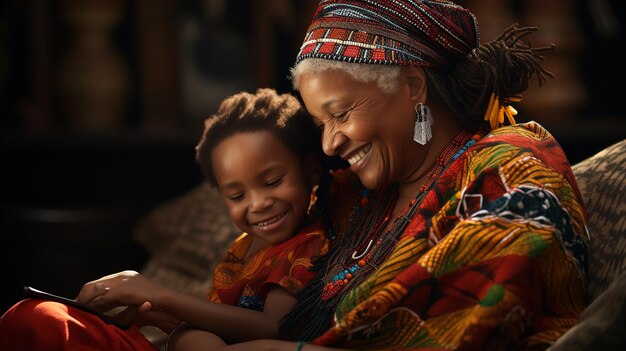
At dawn in many British suburbs, a quiet force is already awake. Wrapped in shawls and holding lunchboxes, Nigerian grandmothers walk their grandchildren to school. While parents hurry off to work, Grandma keeps the household together, the unseen backbone of many Nigerian families abroad.
Across the UK, Canada, and the United States, a new wave of “migrant grandmothers” is reshaping diaspora life. These women, often retired in Nigeria, travel on visiting visas to help their children balance demanding jobs with family responsibilities. They cook, clean, care for newborns, and manage school runs with precision. For many families abroad, this arrangement isn’t a luxury; it’s a survival tactic.
“Childcare here is madness,” says Tolu Oni, a Nigerian nurse living in Kent. “If not for my mum, I’d probably have to quit my job. She takes the baby, drops my son at school, and keeps everything running while I’m on night shift in the hospital.”
The numbers support her point. According to the Coram Family and Childcare Trust, the average cost of nursery care in the UK is £239 per week for a full-time place, often even higher in cities like London. For many immigrant families, these costs are as high as rent. So instead of hiring nannies or paying for daycare, they bring in their mothers, retirees who offer love, trust, and time.
A visiting grandmother can save her children an estimated £5,000 to £10,000 in six months of childcare, according to Bola Adu, a nurse who lives in London. “My mother and mother-in-law have saved my family a lot of money. They take turns coming to London every six months and have been doing so for the past three years. They offer what no nursery can provide, peace of mind and cultural continuity,” she said.
The Visa Shuffle
Under UK immigration rules, visitors can stay for up to six months at a time but cannot take paid work. In practice, many families rotate between grandmothers, with one staying for six months and another arriving as she leaves. It is a family-run system of shift work across borders, keeping the household stable without breaking any law.
The UK Home Office granted more than 33,000 visitor visas to Nigerians in 2024, many under the family category. Immigration lawyers say it is now common for older women to return every few months, maintaining this rhythm of care.
“Technically, they are not employees,” explains an immigration lawyer familiar with such cases. “They are unpaid family visitors, which is entirely legal, but it shows how migration quietly fills gaps in childcare systems.”
Behind the visa shuffle lies something deeper, a cultural tradition that existed long before modern bureaucracy.
Tradition and Trust
In Nigeria, grandparents have always played a central role in raising children. The proverb “It takes a village to raise a child” is not just a saying; it is a way of life. Abroad, that village becomes smaller, and families rebuild it one visiting visa at a time.
“For us, it’s not just about saving money,” says Chika Ozoya, a tech consultant in Manchester. “It’s about having someone we completely trust. My mum raised me, and she knows how to raise my kids.”
Even the children notice the difference. Eight-year-old David Ola, smiling outside his school, says, “Grandma’s food tastes better than school lunch, and she tells funny stories about Nigeria.”
That intergenerational bond is powerful. Sociologists call it cultural reinforcement, the passing of values, language, and discipline across generations and continents.
A Global Phenomenon
Canada already recognises this family dynamic through its Super Visa program, which allows parents and grandparents of citizens or permanent residents to stay for up to five years per visit. In 2023, more than 40,000 Super Visas were issued, many to Nigerians.
It is a policy many UK families wish they had. “If the UK had something like that, we’d save so much stress,” says Tolu Oni. “Every six months, it feels like we’re running a relay race with visas.”
So, they keep the rotation system going, with grandmothers swapping flights every few months like seasoned diplomats.
Rewarding, but Demanding
When asked how they feel about this transnational caregiving, most grandmothers describe it as both tiring and fulfilling. “It’s not easy,” admits Mama Grace, 68, who spends half the year in London and the other in Lagos. “But it’s rewarding. I get to bond with my grandchildren and see how my daughter is living abroad. It gives me purpose.”
Some even structure their year around these visits. “Six months here, six months back home,” she laughs. “It keeps me young.”
The emotional rewards are real, but so are the sacrifices. Many miss community life or family events in Nigeria. Flights are expensive, visa renewals are unpredictable, and adjusting to Western weather takes a toll. Yet most see it as a duty, not a burden.
Madam Rachell, who lives with her daughter in Kent, said, “Coming to the UK to take care of my grandchildren is fulfilling, though sometimes it gets lonely. I keep myself busy with Netflix and regular calls to my friends back home to fill the gap. I enjoy it here during summer, but winter is a different story because the UK weather is as unpredictable as Nigeria’s NEPA.”
The Hidden Economy of Love
Behind every working Nigerian couple abroad, there is often a grandmother making it possible. Economists say that if their caregiving were monetised, it would amount to millions each year. Add that to Nigeria’s 20 billion dollars in yearly remittances, and it becomes clear that this invisible labour strengthens not just families but entire economies.
Still, their work goes unrecognised. These women are neither counted in migration statistics nor compensated for their labour. It raises an uncomfortable question: if governments acknowledged the economic value of unpaid family caregiving, would immigrant families still have to juggle the visa system to survive?
For now, they remain the quiet workforce behind diaspora stability, bridging continents, cultures, and generations.
Legacy and Love
Sociologist Dr Temitope Adebayo summarises it best: “What we are seeing is a transnational form of family life. These grandmothers are not migrants in the traditional sense; they are mobile kinship anchors. They embody continuity across borders.”
Back in Kent, school is out. Children rush from classrooms shouting, “Grandma!” before running into familiar arms. It is a scene repeated daily across the Western world, small and tender acts of love that sustain entire households.
As Mama Grace puts it simply, “We raised our children, and now we are raising their children too.”
And perhaps that is the real story of migration, not just the pursuit of a better life but the quiet passing of love, strength, and tradition across oceans.
Kindly follow us on twitter:@AfricanVoice2