
How Long Must Black People Make Themselves Smaller to Survive?
By Olakunle Agboola – The Jason Arday story is bigger than one professor
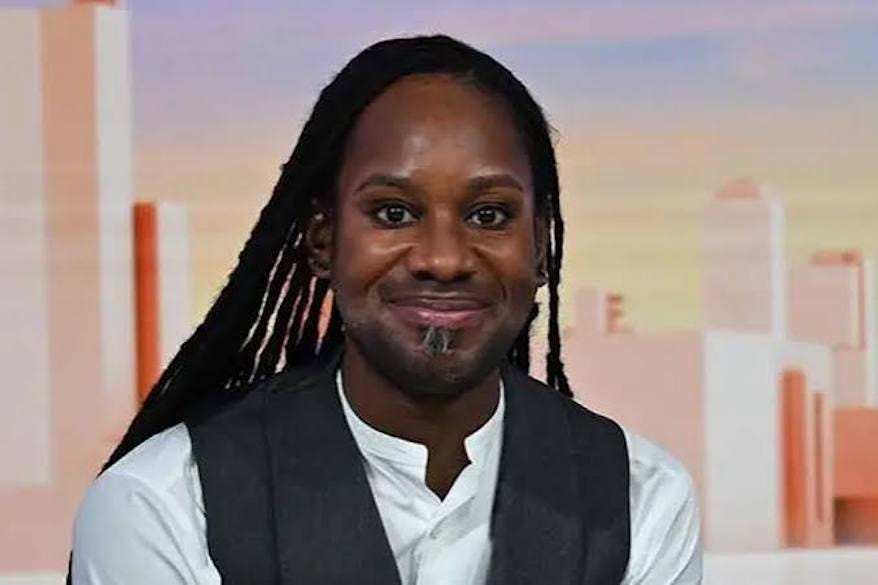
The story of Professor Jason Arday has become much bigger than the career of one Black academic. Arday became the youngest Black professor in the history of the University of Cambridge, a remarkable achievement at a time when Black representation remains extremely low at the highest levels of British academia. His subsequent controversy, including scrutiny of his academic work and allegations of plagiarism that he denied, raised broader questions about merit, diversity, academic standards, and the treatment of Black professionals in elite institutions.
There is no argument that Black professionals should be protected from legitimate scrutiny because they are Black. Academic standards matter, and allegations against any academic should be investigated regardless of race. Black people deserve equality, not immunity. However, Arday’s experience also raises a broader question: what happens when Black excellence enters institutions where Black people have historically been underrepresented in positions of authority?
That question takes us beyond Arday himself and into the experiences of many Black professionals who have spent years navigating predominantly white institutions.
The history behind the present
The experiences of Black professionals today cannot be completely separated from the history of slavery, colonialism and racial discrimination. These systems did not simply create economic and political inequality. They also produced ideas about intelligence, civilisation, authority and leadership.
For generations, Black people were portrayed as inferior and incapable of exercising authority over white people. European institutions and knowledge were often presented as superior, while African societies and achievements were diminished or ignored. These ideas helped establish a hierarchy in which whiteness became associated with intelligence, education and authority.
Modern Britain is obviously different from the Britain of the colonial era, and it would be wrong to suggest that every white person carries those attitudes. Many white people actively oppose racism and support equality. However, institutions can retain cultures and assumptions long after the systems that created them have changed.
One of those assumptions concerns who looks like a leader.
When generations of people have seen professors, headteachers, directors, chief executives and senior officials who are overwhelmingly white, the image of authority can become associated with whiteness. This does not mean everyone consciously believes a Black person is inferior, but it does mean that established ideas about leadership can be difficult to change.
The pressure to tone down Black excellence
This is where my own observations and conversations with Black professionals become important. I have spoken with Black people working in predominantly white institutions who describe a form of professional survival that is difficult to capture in statistics. They are not necessarily experiencing open racial abuse, but they have learned to manage how they speak, how strongly they challenge decisions and how visibly they demonstrate their knowledge.
Some have told me that they deliberately tone down their qualities because they believe it is safer to do so. They may know more about a particular issue than someone senior to them, but they are careful about demonstrating that knowledge because they do not want their competence to be interpreted as arrogance or disrespect.
A white employee may challenge management and be regarded as confident or ambitious, while a Black employee making the same challenge may worry about being labelled aggressive or difficult. A white professional can openly disagree with leadership and be praised for initiative, while a Black professional may calculate whether speaking out will create unnecessary problems.
This is one reason systemic racism can be difficult to identify. There does not always have to be a written rule preventing Black people from advancing. Sometimes the culture of an institution teaches people how far they can go without attracting unwanted attention.
Eventually, some people learn to suppress their own excellence.
When survival becomes more important than promotion
I have encountered Black professionals who simply want to do their jobs, support their families and build respectable careers without constantly fighting battles that have little to do with their actual work. Some have learned to accommodate white leadership even when they believe that the leadership is making poor decisions because they do not want to become labelled as confrontational or difficult.
That should not automatically be interpreted as a lack of ambition. Sometimes it is a survival strategy.
A person can have the ability to become a senior manager, director or headteacher and still decide that the personal cost of reaching that position is too high. From the outside, that decision may look like a lack of confidence. From inside the system, it can feel like a rational response to years of experience.
The institution does not always have to tell a Black person that they cannot succeed. If the individual believes advancement will bring disproportionate hostility, scrutiny or isolation, they may eventually decide that remaining where they are is safer.
What Black professionals have told me about the prison service
I have also spoken with Black people who worked in the prison service, and some described watching white colleagues progress more quickly than they did. In some cases, they felt that by the time they were ready for promotion, their white counterparts had already moved one or two levels higher.
Their individual experiences cannot, by themselves, prove that racism caused every promotion decision. However, those experiences deserve consideration alongside official evidence.
The government’s 2024/25 HMPPS staff equality report shows that ethnic minority representation remains lower at some senior operational grades, with ethnic minority staff accounting for only 6.1 percent of operational managers in bands 7 to 9. HM Inspectorate of Prisons has also documented Black prison staff reporting discrimination, isolation and barriers to career progression.
These findings do not mean that every white colleague is racist or that every promotion involving a white employee is discriminatory. They do, however, show that the experiences described by the Black professionals I spoke with are not occurring in isolation.
Career progression is not determined by qualifications alone. Mentoring, sponsorship, professional relationships and access to senior networks can influence who becomes visible, who receives opportunities and who is regarded as having leadership potential. Two professionals with similar qualifications can therefore experience very different career paths.
The headmistress who chose not to lead
One conversation I had with a Black woman illustrates the psychological cost of this problem particularly well. She told me that she had been offered a headmistress position and believed that she was the most qualified person for the role. Yet she decided not to accept it.
Her concern was not that she could not lead. She feared what might happen after she became the person in charge. She told me that she would rather remain an assistant headmistress and eventually retire than place herself at the centre of petitions and complaints that she feared could damage or destroy her career.
We cannot independently establish that every complaint she anticipated would have happened or that such complaints would necessarily have been motivated by racism. But the fact that a highly qualified professional could view leadership as carrying such a significant personal risk that she preferred to remain in a lower position should make us uncomfortable.
She had not been prevented from becoming a headmistress. She had become convinced that leading was not worth the potential cost.
That is one of the hidden consequences of institutional inequality.
Why Arday became a symbol
This is why Arday’s rise at Cambridge matters beyond his individual career. A Black professor at one of Britain’s most prestigious universities remains unusual. His appointment therefore became symbolic of progress in a system where Black people remain severely underrepresented at professorial level.
But symbolism can also become a burden.
A white academic who becomes a professor can often remain an individual whose success is judged primarily through academic achievement. A Black academic can become a symbol of diversity, representation and racial progress. His success can be celebrated as evidence of change, while his failures can attract attention far beyond the individual.
That does not mean criticism of Arday was automatically racist. Legitimate concerns must be investigated. The important distinction is between examining one person’s record and using that person’s experience to question the competence or legitimacy of Black professionals generally.
Black people should not be protected from accountability, but Black achievement should not automatically be treated as suspicious.
The real test is whether Black people can lead
The deeper issue is whether predominantly white institutions are comfortable with Black people not merely working inside them, but leading them.
It is one thing to employ Black people. It is another to promote them into management. It is another to trust them with major decisions. It is another to accept a Black person as the person in charge.
Leadership involves power, and that is where assumptions about authority can become most visible.
This is why the real measure of equality is not simply whether Black people are allowed into the room. It is whether they can rise through the institution, demonstrate their competence, challenge poor decisions and eventually lead without having to make themselves smaller to survive.
A Black professional should not have to pretend to know less than they know simply to make a senior colleague comfortable. A Black woman who is the most qualified person for a headteacher position should not feel that accepting leadership will expose her to a professional battle she believes could destroy her career. A Black academic who genuinely earns a professorship should be able to occupy that position without becoming responsible for proving the legitimacy of Black people everywhere.
Black people do not need lower standards. They need fair access to the same standards.
The question is not whether Black people are capable of excellence. History has already answered that.
The real question is whether institutions that have historically been dominated by white people are genuinely prepared to accept Black excellence when it reaches the highest levels of authority.
How long must a Black person hide part of their excellence simply to make an institution comfortable with their presence?
In a genuinely equal society, the answer should be simple: they should not have to.