The old political guard faces unprecedented scrutiny as young Africans assert their voice
By Olakunle Agboola – nAfrica is simmering, and the temperature is political. Across the continent, especially in West and East Africa, citizens are taking to the streets, demanding leadership that reflects their reality. From Cameroon to Uganda, Ivory Coast to Togo, the story repeats itself: ageing leaders clinging to power, youth revolts met with bullets, and foreign governments applauding stability over justice. The people are tired, and their voices are growing louder.
Cameroon: A Crisis in Plain Sight
In Cameroon, the recent declaration of Paul Biya as the winner of another presidential election reignited long-suppressed anger. At 92, Biya has ruled since 1982. His leadership spans more than twice the lifespan of most Cameroonians, whose median age is 18. For many, this election felt like the final insult in a long history of political manipulation.
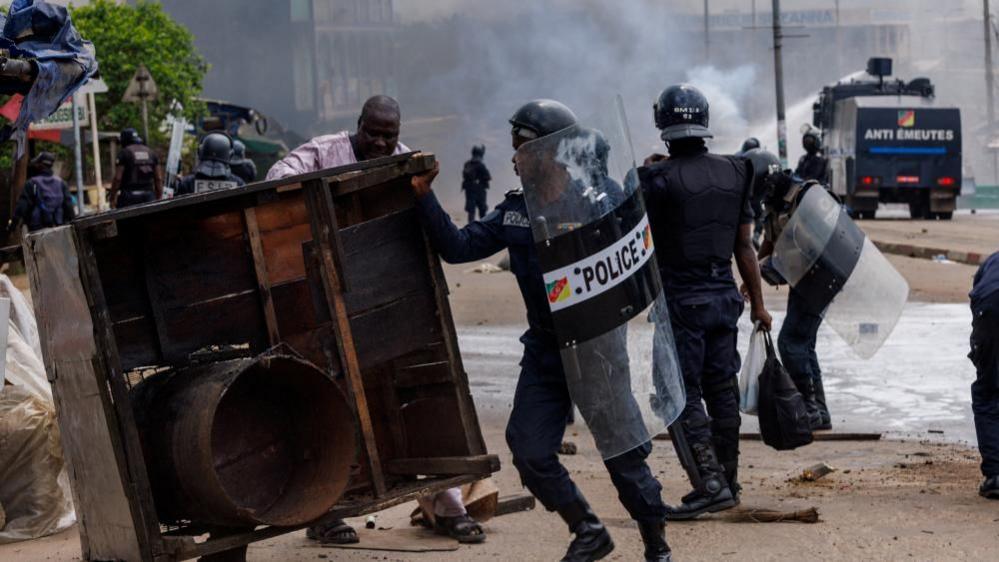
When the African Union congratulated Biya despite reports of electoral irregularities and mass protests, it deepened the wound. Young Cameroonians flooded the streets of Douala and Yaoundé, holding signs reading, “We didn’t vote for Biya” and “Cameroon is not for sale.” The response was swift, with tear gas, arrests, and silence from international observers.
Many believe Biya’s hold on power is sustained not by the people but by foreign interests, particularly France. Colonial ties still shape Cameroon’s political and economic reality. France’s influence is visible in oil contracts, security partnerships, and resource management. For many citizens, Biya is a custodian of European interests rather than a leader of the people.
The Western Smile and African Silence
The African Union’s message of congratulations reflects a broader pattern. The AU, intended to defend the continent, often shields regimes it should challenge. Western powers prefer continuity over justice, smiling at stability while ignoring corruption and oppression.
In Uganda, President Yoweri Museveni has been in power since 1986. Despite public fatigue, state machinery shields him. His daughter publicly urged Ugandans not to vote for him, signaling frustration that is hard to ignore. Museveni maintains power with loyalists around him and a judiciary that no longer serves the people.
Ivory Coast offers another example, where President Alassane Ouattara secured a fourth term through constitutional manipulation. Protests were met with French military intervention. The pattern is clear: Western powers preach democracy but defend allies when citizens rise.
Generational Divide and the Rebellion of the Young
Across Africa, a generation raised on smartphones and social media confronts systems built on old colonial hierarchies. The Gen Z movement is not merely political, it is existential. This generation refuses to wait for permission to challenge authority. They question who rules, who benefits, and who decides the future of their nations.
From Nairobi to Lagos, young Africans mobilize, expose corruption, and tell their stories without state mediation. In Cameroon, protesters livestreamed police violence. In Uganda, artists like Bobi Wine turn music into political resistance. The energy that fueled Nigeria’s #EndSARS movement and Senegal’s youth uprisings is spreading across the continent. Old power cannot ignore it.
Neocolonialism in African Skin
The irony is stark. Africa may have black presidents, flags, and independence days, but many citizens feel real decisions are still made elsewhere. Economic ties, military support, and resource extraction keep former colonial powers in control. In Cameroon, oil, timber, and minerals leave the country while poverty rises.
A Cameroonian teacher said during protests, “We are independent only on paper. The white man still decides who rules us.” The same sentiment resonates in Togo, Madagascar, and other nations where leaders enjoy Western backing despite failing their citizens.
When the Malagasy president fled to France after being ousted by youth protests, it symbolized everything wrong with Africa’s political order, with leaders more loyal to Paris than to their people.
The AU’s Failure and the West’s Hypocrisy
The African Union was created to defend African sovereignty but has become a club for presidents-for-life. The organization rarely represents citizens. It legitimizes flawed elections and shields despots under “non-interference.” The West preaches democracy while financing autocrats who protect its economic interests.
In 2025, the European Union commended Cameroon’s “peaceful elections” even as observers reported voter intimidation and ballot tampering. African leaders who comply with Western interests receive praise and aid, while those who challenge the status quo, such as the juntas in Mali, Niger, and Burkina Faso, face sanctions and isolation. For many Africans, it is colonialism with a new vocabulary.
The Battle for Africa’s Soul
What we are witnessing is more than political unrest. It is a generational confrontation between those who fear change and those who embody it. The old order, built on fear, patronage, and Western validation, is losing control. Young Africans demand results, accountability, and systems that reflect their aspirations.
In Cameroon, Biya’s frail image is a symbol of Africa’s political paralysis. His voice may echo on state television, but it no longer commands respect. The same disconnection exists in Uganda, Togo, and Ivory Coast, with leaders governing without consent and ruling without legitimacy.
Africa’s Turning Point
A new consciousness is spreading across Africa. It is impatient, bold, and aware of history. The young are fighting not just against individuals but against a system that has stolen their future. They expose the hypocrisy of leaders who preach sovereignty while depending on foreign approval. They demand a continent that stands on its own terms.
History is on their side. From Senegal’s peaceful transition to uprisings in the Sahel, Africans are reclaiming their agency. The West may resist, and old men may cling to power, but the tide is turning.
Power does not yield without demand, and Africa’s youth are demanding everything. This is not only a protest; it is a reckoning. The fight for Africa’s freedom is now against the protégés of colonial masters, not the colonizers themselves. The continent is awakening, and there is no turning back.