Professor Chris Imafidon, chair of ExcellenceinEducation.org.uk – an inner-city educational initiative, highlights the Blueprint for Breaking Barriers: How One inner-city Scholarship Ignited a Trailblazing Path to Power.
INNER-CITY THROUGH IVY LEAGUE TO THE TOP
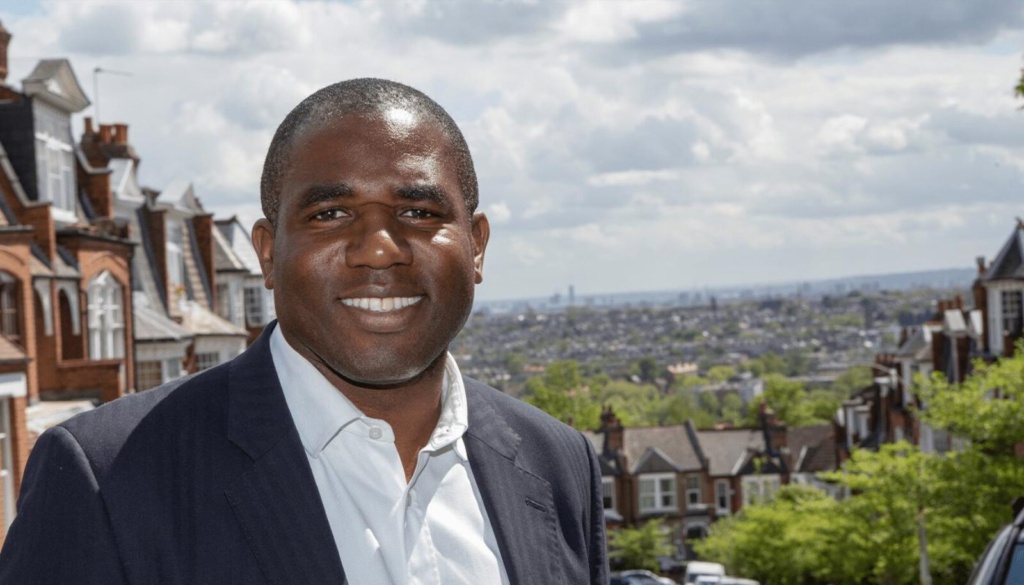
In the vibrant chaos of inner-city London, where dreams often clash against the unyielding walls of poverty and prejudice, David Lammy’s story unfolds like a symphony of defiance and destiny. Appointed Deputy Prime Minister and Lord Chancellor on September 5, 2025, following Angela Rayner’s resignation, Lammy shattered yet another glass ceiling as the first Black Briton to hold this pivotal great office of state. His ascent is not merely a political triumph but a soul-stirring saga of resilience, echoing the transformative hope Barack Obama instilled in a generation of Black youth across the Atlantic. For every young Black pupil gazing out from a cramped classroom in Brixton, Hackney, or Peckham—surrounded by the echoes of struggle—Lammy’s journey whispers a profound truth: your roots may bind you, but education can set you free to lead.
Echoes of Absence: A Childhood Forged in Faith and Fire
Born on July 19, 1972, to Guyanese immigrants in Tottenham’s working-class embrace, Lammy entered a world rich in Caribbean rhythms yet shadowed by economic storm clouds. His father, a skilled taxidermist, and his mother, a tireless home aide who moonlighted as a care assistant and Tupperware seller, were Windrush pioneers chasing the promise of post-war Britain. But that promise frayed when, at age 12, when Rosalind Lammy became a single mother left to raise five children alone in an inner-city council flat. “I have always felt that hole in my life,” Lammy later confided in a Guardian reflection, the raw ache of abandonment fueling a quiet fire within. Amid the scent of jerk chicken wafting from neighbors’ windows and the distant wail of sirens, young David’s world was a tapestry of church hymns, street football, and unspoken dreams. His mother’s mantra—”Education is your ticket out”—became the heartbeat of his resolve, a rhythmic mantra that would propel him beyond the horizon.
The First Melody of Magic: A Choral Scholarship’s Serendipitous Song
Education emerged as Lammy’s greatest ally early, not through grand fanfare but a boy’s pure voice cutting through silence. At age 10, while attending Downhills Primary School, he auditioned for a choral scholarship from the Inner London Education Authority. His soaring tenor earned him a place at The King’s School in Peterborough—one of Britain’s rare state-funded choral boarding schools—where he would sing in the hallowed acoustics of Peterborough Cathedral. “It was my Billy Elliot moment,” Lammy quips in interviews, likening the improbable leap to the dancer’s pirouette from coal mines to spotlight. Or, for a modern twist, his “X Factor” audition, where raw talent trumped polished privilege. This scholarship was no mere award; it was a lifeline, covering fees and board for a child from Tottenham’s estates. Transplanted to a sea of white faces, Lammy became the school’s lone Black pupil for years, navigating microaggressions like a chorister dodging off-key notes. “You’re the diversity hire,” classmates teased, their words a subtle dissonance against his alto lines. Yet, in those echoing cloisters, education wove its spell: Latin conjugations sharpened his logic, history lessons ignited his sense of injustice, and the discipline of daily rehearsals built an unshakeable poise. By 14, he rose to Head Boy, a leadership role that planted the seeds of command. This improbable perch—singing psalms amid ancient stones—taught him that voice, literal and figurative, could command rooms and rewrite fates. For Black pupils today, it’s a vivid vignette: one audition, one scholarship, and suddenly, the world tilts toward possibility.
Harmonies of the Mind: From SOAS to Harvard’s Hallowed Halls
As Lammy’s adolescent voice deepened, so did his ambitions, propelled by education’s escalating ladder. He transferred to Highgate Wood Secondary School, where academic excellence earned him entry to the School of Oriental and African Studies (SOAS) at the University of London. Graduating with a 2:1 in law in 1993, he was called to the Bar at Lincoln’s Inn the following year, honing advocacy skills in mock courts that mirrored the parliamentary battles ahead. But SOAS was more than degrees; it was a crucible for cultural reclamation, immersing him in postcolonial studies that mirrored his Guyanese heritage and fueled his critique of the empire’s lingering shadows. The ladder’s next rung gleamed across the Atlantic: a prestigious Commonwealth Scholarship whisked him to Harvard Law School in 1997, making him the first Black Briton to earn an LLM there. “Nobody else had applied,” he told The Independent in 2007, the weight of representation pressing like a sonnet’s iambic pulse. At Harvard, amid ivy-clad debates on constitutional law, Lammy forged bonds with future giants—including a certain Barack Obama—while confronting isolation as the token international voice. Late nights poring over civil rights tomes weren’t just study; they were soul-searching symphonies, composing the score for his lifelong advocacy. This elite education, funded by merit over money, dismantled doors bolted by class and color, proving education’s alchemy: turning a Tottenham treble into a transatlantic tenor of influence.
Defiant Crescendos: Confronting Racism’s Relentless Refrain
Yet, no ascent is without discord. Racism shadowed Lammy like a dissonant chord, from Peterborough’s playground slurs—”Go back to where you came from”—to Harvard’s hushed assumptions of affirmative action. As a young man in a hoodie, he endured stop-and-searches, nine times more likely for Black youth, as he later quantified in speeches. The 2011 Tottenham riots, erupting in his boyhood streets after Mark Duggan’s police killing, crystallized these fractures. Lammy, then an MP, walked those smoldering pavements, penning Out of the Ashes to reframe “thugs” as products of systemic neglect. “The hoodie dresses up boys’ blackness for the media,” he argued, turning personal pain into policy poetry. In politics, too, barriers loomed. Elected Tottenham’s MP at 27 in 2000—succeeding Bernie Grant, another Caribbean colossus—Lammy faced whispers of tokenism in Labour’s ranks. The 2018 Windrush scandal, deporting elders like his own kin, ignited his parliamentary fury: “These are British citizens!” he roared, his baritone demand birthing a compensation scheme. His 2017 Lammy Review exposed criminal justice biases—Black defendants twice as likely for custody—offering 35 recommendations that reshaped reform. Each confrontation was a crescendo: education’s toolkit—eloquence from SOAS debates, strategy from Harvard seminars—arming him to harmonize outrage into action. For inner-city pupils, these anecdotes sing of survival: racism may compose the minor key, but education conducts the major resolution.
Ministerial Movements: Education’s Enduring Echo in Leadership
Lammy’s political overture swelled under Blair and Brown: junior minister for health, culture, and—fittingly—higher education from 2008 to 2010. As Minister for Universities, he championed access initiatives, drawing from his scholarships to advocate for “systemic” over “piecemeal” change. “Universities must diversify the elite,” he urged at a 2018 Birkbeck speech, decrying Oxford’s “social apartheid.” His own path informed policies like night schools and outreach in Haringey, echoing his mother’s evening labors.Post-2010, from backbenches to shadow foreign secretary, education remained his lodestar. He pushed £500 million for affordability initiatives and £10 million for Oxford’s diversity drive, always circling back to that choral scholarship: “If not for King’s School, no politics,” he tweeted in 2024. Now, as Deputy Prime Minister, Lammy orchestrates justice reforms with the same scholarly precision, his Harvard-honed global lens eyeing human rights from Gaza scholarships to Ukraine aid.
A Timeless Overture: Inspiring the Next Generation’s Grand Finale
David Lammy’s odyssey—from Tottenham’s treble to Westminster’s throne—is education’s grand opus, a narrative as emotive as Obama’s “Yes We Can.” For Black pupils in Britain’s poorest postcodes, it’s a heartfelt hymn: scholarships aren’t strokes of luck but ladders of legacy. One voice in a cathedral can echo to No. 10; one degree can dismantle dynasties of doubt. Lammy’s mother, juggling jobs for books, reminds us: education isn’t just ascent—it’s the soul’s unyielding song. In his triumph, every child hears their own potential crescendo: rise, lead, rewrite the score.
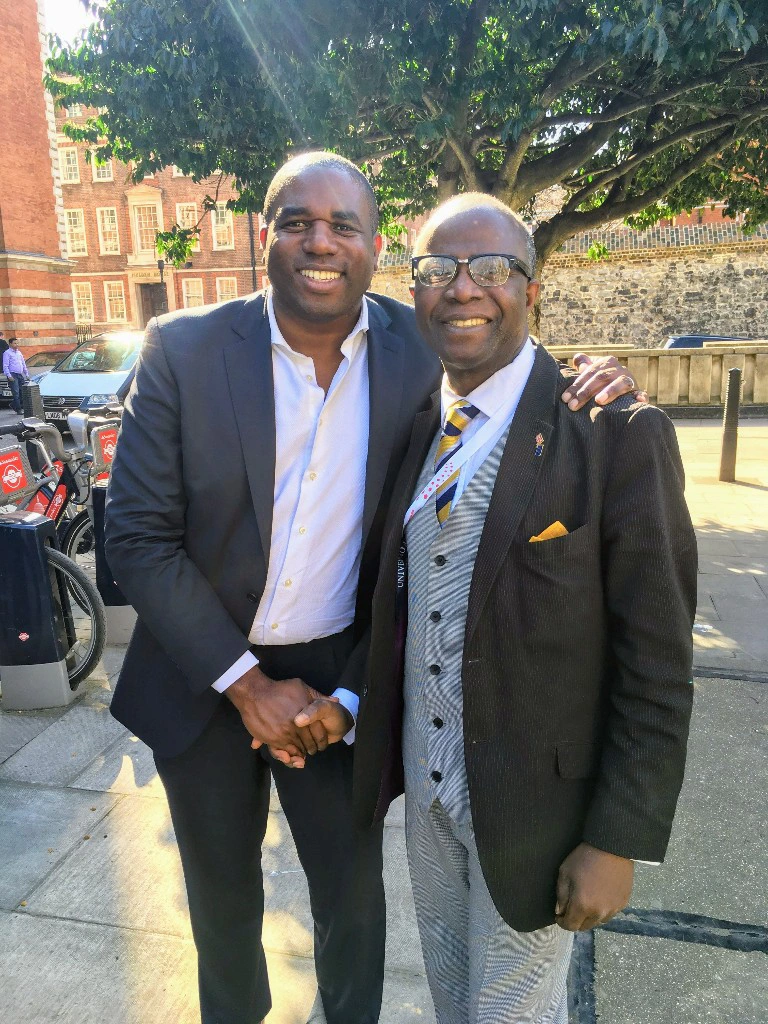
Professor Chris Imafidon is chair, ExcellenceinEducation.org.uk, an alliance of inner-city educational charities and institutions that mentors youths, women and professionals in the commonwealth. He is a multi-Guinness World record holder; internationally renowned adviser to monarchs, governments, presidents and corporate leaders; Mentor to Unicorns; multi-millionaire tech entrepreneurs & many world record holders. His Artificial Intelligence, and other research or innovation have been recognised internationally, winning multiple awards. Professor Imafidon is 5X International Bestselling author; Mentor to New York Times Bestsellers and a Sunday Times Op-ed author, a Wall Street Journal BestSelling author and a regular contributor to British and international media;. [Twitter @ChrisImafidon; Instagram @CoImafidon; Facebook/Linkedln/ClubHouse –Professor Chris Imafidon