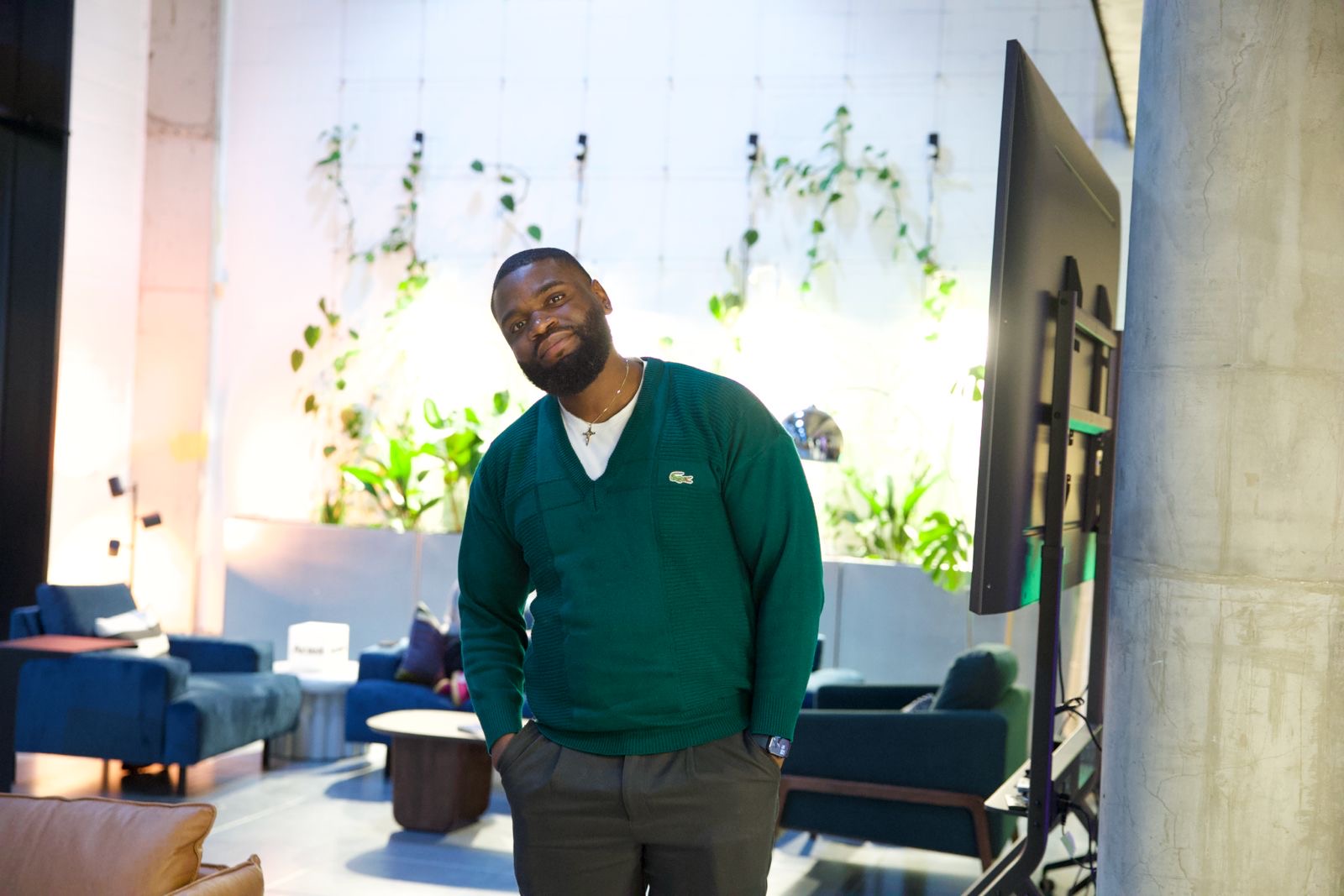

Written by: Michael I. Ohajuru BA (Hons) Duniv (Open)
I was delighted when the team at The Open University (OU) invited me to interview Montelle Bee, a young working mother now in her second year studying Psychology. I wanted to hear how her OU journey was progressing—how she was finding the experience and whether it was meeting her needs.
A Path Rediscovered
I began by asking what first attracted her to the OU. Montelle told me she had always planned to go to university to study psychology. At school, she was academic and doing well in her A levels, on track to secure a place at a red-brick university. But a dramatic change in circumstances meant that instead of heading to university, she had to go straight into work.
“I needed money. I needed to provide for myself,” she recalled. “At the time, I felt devastated. All of my friends were going off to university, but I didn’t have the support or resources.”
She went straight into full-time employment. But the desire to study never left her. Years later, she discovered The Open University. Its flexible, part-time learning model appealed to her. By then, she’d learned she could manage full-time work and part-time study—with the right support.
“The OU felt so inclusive,” she said. “It offered me an opportunity when there was no clear path. That’s really what enticed me to take that next step.”
Flexibility with Purpose
It was interesting to reflect on how different our reasons for joining the OU were. I enrolled as I approached retirement, looking to explore new academic interests. Montelle joined to finally access a university education—something that had been denied to her years earlier. But for both of us, the OU’s flexible learning model was the perfect solution.
Having discussed her route to the OU, I was curious to know how she was finding the course itself. Montelle admitted it had been intense – “definitely tough at times” – but said the experience had been rewarding.
“Like anything worthwhile, it requires discipline and organisation.”
She particularly appreciated how clearly the OU structured expectations.
“They gave guidance on how many hours to study each week to succeed, which was really helpful,” she explained. That advice helped her set aside regular time for study, balancing it alongside work and family responsibilities.
“The flexibility really worked for me. No one was micromanaging or checking in all the time—it was up to me. But that independent structure suited me perfectly.”
Real Learning, Real Support
Getting back into academic writing was initially a challenge.
“The first few assignments were tough—but in a good way,” she said. “Once I got back into the rhythm, I really enjoyed it. The feedback was always positive and constructive. Even when there were areas to improve, it built my confidence.”
She found the overall student experience seamless. “The online portal, the Student Help Centre, the forums, the tutor support—it was all so helpful. Everything was broken down clearly, even to things like submitting a tutor marked assignment. The writing tutorials really supported the academic side. All of that made a big difference.”
I asked whether her friends or family had been supportive of her decision. “At first, they were really sceptical,” she admitted. “They didn’t understand the idea of an online university—some thought it wasn’t real, just a fad”. But once Montelle explained what the OU was, how it worked, and its credentials, she won them over.
They saw how serious she was—and supported her. What really helped her was when her family understood that an OU degree is just as well respected as one from a traditional university, is recognised around the world, and employers take it seriously.
She told me that gave them the confidence to believe in what she was doing—and in her!
More Than Just Online?
When I asked about support, Montelle lit up. “I absolutely loved the tutorials—especially the in-person ones,” she told me. Most OU study is online, but some modules include face-to-face sessions—and every course has forums and groups so students can connect, share ideas, and not feel like they’re doing it all alone.
“Meeting all the peers I’d been chatting to on WhatsApp or in Facebook study groups made it not feel like we’re doing it all alone – it’s a proper student community”
She praised the tutors as “animated and passionate,” saying they brought the course material to life. I knew exactly what she meant. I remember the feeling well. Being in contact with others doing my course was an opportunity to share and debate issues and ideas from the coursework. It reminded you that you weren’t alone—you were part of something bigger.
I thoroughly enjoyed our conversation. Montelle’s journey with the OU has been one of rediscovery, resilience, and rising to the challenge—proving that with the right support and determination, there’s always an opportunity to reclaim your future.
| There are over 200 qualifications to choose from, including Psychology, Business, Law, Health and Social Care, Computing, IT and more. The Open University offers students the opportunity to study anytime, anywhere, at a pace that suits them, without putting their life on hold. OU students are supported every step of the way by expert tutors, a dedicated student support team and all the career advice needed to take that next step. Search open.ac.uk to find out more. |